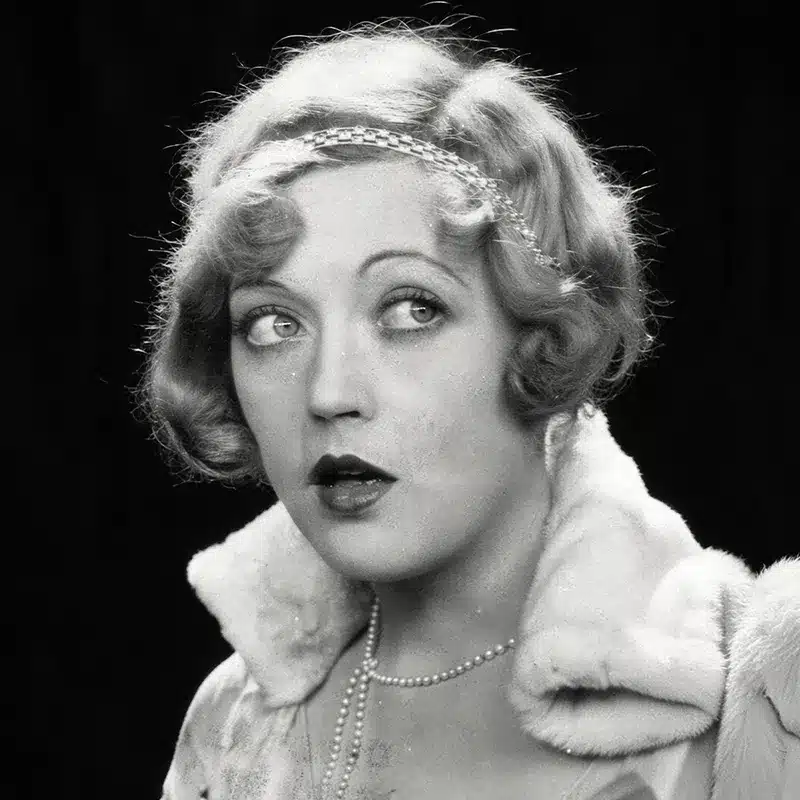
“We didn’t need dialogue. We had faces!” exclaims former silent film star Norma Desmond, played by actual silent star Gloria Swanson, in Billy Wilder’sSunset Boulevard(1950). Even though silent films did clutter the screen with dialogue cards when necessary, and sometimes when not, the basic truth of the line can be proven by two of the most dynamic, vivid, charismatic, charming, sexy, and funny leading ladies of the silent era: Laura La Plante and Marion Davies.
La Plante and Davies star in newly restored films on Blu-ray. By coincidence or not, both films call attention to biased gender roles by having their heroines turn the tables and take the aggressive “masculine” role in relations between the sexes.
Unfortunately, Davies became best known as the unmarried cohabitant of William Randolph Hearst, a personal detail that overshadowed her successful film career. At the same time, he pretty well financed that career through his production company, Cosmopolitan Pictures.
After her 1917 film debut inRunaway Romany, which she wrote and her brother-in-law George W. Lederer directed, Davies signed a contract with Cosmopolitan to produce 29 of her films. She played a variety of roles, but she and her audiences responded best to her vivacious, puckish, prankster comedies. One such is Robert Z. Leonard’sThe Cardboard Lover,one of her three comic hits of 1928, and it’s now on Blu-ray from Undercrank Productions.
Laura La Plante, known for a kind of wave-curled helmet of blonde hair and a bewitching sparkle, possesses an uncanny power to project a vividly realized personality beyond the screen.Herevery scene is a kaleidoscope of meticulous gestures andshades that look lived in the moment, neither practiced nor affected. She even turns a pratfall into a tour de force of emotions, as first we laugh and then empathize. La Plante stars in Kino Lorber’s Blu-ray of William Wyler’s The Love Trap (1929), a mischievous lark important for several reasons.
Getting Her Man in The Cardboard Lover
Sally Baxter (Marion Davies) is an American student on a tour of the French Riviera with a busload of like-minded flappers. She’s introduced while smashing her bus window to get her first look at the surroundings and thinks nothing of elbowing her way to the front of the crowd. All this gives us her number as a brash young upstart.
As an autograph hound, Sally determines to get the signature of tall, handsome tennis star Andre Briault (Nils Asther). When he asks why she wants it, she replies, “Because you’re so beautiful!”
Meanwhile, Andre is having shenanigans with a glamorous, unfaithful girlfriend, Simone (Jetta Goudal), who’s stepping around with a “famous baritone” called De Segurola. He’s played by an actual opera star of the same name,Andrés de Segurola, although his character is so sleazy that it’s a bit much to claim he’s playing himself. The baritone makes a come-on to Sally in her autograph book, and she gives him the cold shoulder.
Still pursuing his autograph, Sally steals a very small car (!) – so small that she tells the doorman to leave it in a phone booth – before chasing Andre into a casino. After unwittingly losing money to Andre at baccarat, he assigns her to masquerade as his girlfriend and keep him from falling back into Simone’s clutches.
After unwittingly losing money to Andre at baccarat, he assigns her to masquerade as his girlfriend and keep him from falling back into Simone’s clutches.
Andre proves a weak-willed critter, but Sally follows through with a vengeance, following him everywhere and invading his house to prevent his reconciliation with Simone. One charming sequence is conveyed entirely by focusing on the characters’ feet as they rush around town.
In one of Sally’s most brazen ploys, she asks a bellboy to “do me a favor” and “take off your clothes.” He obligingly hides in the bushes and tosses out his uniform. It hardly seems necessary for him to put on her dress in exchange, but he does so anyway, apparently just for the laugh.
One of the hardiest tropes in American film comedies is the brash hero who makes a pest of himself with a woman who behaves coldly to him until his charm wins her over with no sign of a restraining order. For example, this is perpetually how Fred Astaire’s characters woo the women played by Ginger Rogers, at least until they get a load of his dance moves in a tux. InThe Cardboard Lover, it’s the plucky American debutante who makes a pest of herself, and he even calls her a pest, until she wins over her man.
As a sign of how original this concept is, it appears to reverse its source material: a 1926 French play by Jacques Deval, translated into English asHer Cardboard Loverby Valerie Wyngate and, no less than, the great comic writer P.G. Wodehouse. The 1928 London production starred Tallulah Bankhead and Leslie Howard. Howard played the secretary hired by a rich woman called Simone, who wanted him to prevent her from falling for her ex-husband.
That more standard incarnation of sex roles can also be seen in the two remakes of the same property: Edward Sedgwick‘sThe Passionate Plumber(1932), which refashions the material as a Buster Keaton vehicle, and George Cukor‘sHer Cardboard Lover(1942) with Norma Shearer and Robert Taylor, the most faithful film version of the play. In these versions, it’s the woman who must be pestered by the man. True, she initially hires him to do so, but then he goes beyond his brief and proves all too effective at sticking to her like glue. Caveat emptor.
Nils Asther, of the shiny hair and tiny mustache, was a Swedish heartthrob famous in the silent era for working with Greta Garbo and other major stars. He’s largely forgotten today, but Andre’s facial expressions during the removal of a mustard plaster show real comic flair. Even more forgotten is Jetta Goudal, who’s billed above Asther. She worked several times with Cecil B. DeMille and successfully sued him for breach of contract when he fired her.
Undercrank’s Blu-ray and DVD editions ofRobert Z. Leonard‘s The Cardboard Loverare digital restorations from Marion Davies’ own print at the Library of Congress plus two other sources. Ben Model plays a new organ score. A side-by-side presentation of Reel Five “before” and “after” shows the degree to which digital techniques can remove or minimize nitrate damage. It’s impressive.
The Love Trap and What’s Good for a Gander
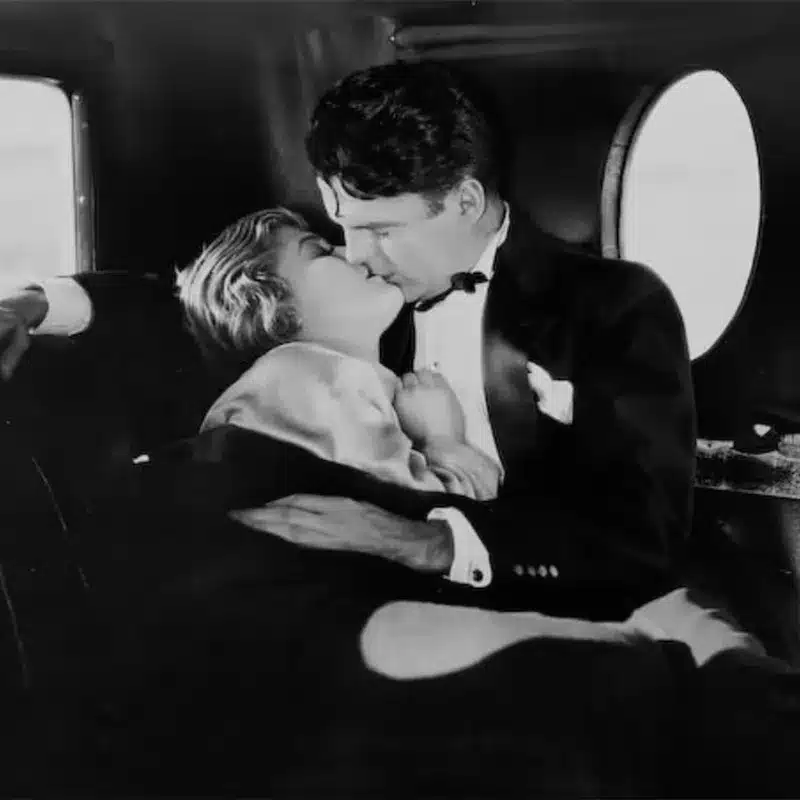
The sexual double standard collides with the class war inThe Love Trap, a breezy 70-minute film whose story is light as a feather and full ofclichés. Those qualities never mar our investment in the ups and downs of its pert heroine, Evelyn Todd. Laura La Plante’s charisma accounts for more than half the appeal, while the rest is due to William Wyler‘s direction.
He opensThe Love Trapwith a sequence gracefully balancing several elements while introducing its star. A chalkboard announces a rehearsal for full chorus. A man strides to a piano in silence, sits down and poises his hands over the keys, then begins to play as the piano score kicks in on cue. This choice subtly announces the recorded soundtrack, although it will be more than 40 minutes before we hear any dialogue.
The chorus girls are introduced by their line of shapely gams, with the upper frame cutting them off above the waist. We get an eyeful of what’s being sold: a mechanistic, almost disembodied sex appeal. Suddenly, the women bow down into frame, and here’s our talkative heroine, third in the receding line, chatting to her neighbor while her head is practically upside down. When the torsos rise out of view again, and the kicks begin, we now know that Evelyn is literally out of step with her peers, and that will be true in more ways than one.
The dance director humiliates and fires Evelyn in a rough if witty way. Shifting emotions register across La Plante’s face as her character realizes she’s losing her job and isn’t being singled out for praise. In this, as in every other scene, La Plante’s modulations are effective and sympathetic to the point of brilliance. She conveys so much that we’re entirely with her. Evelyn speaks quite a lot but almost never gets a title card explaining what she says. Not only can we often read her lips clearly, we read everything about her clearly.
Evelyn retreats to the dressing room for a good cry and peruses her landlady’s note that she’s about to be evicted. All the bad things are happening at once, but the camera pans down to show that she can’t help tapping one foot to the continuing rehearsal music, which is now appropriately muffled. We even “hear” her soundless taps. The music rises and muffles again as her chum, Bunny (Jocelyn Lee), enters to console her.
As a mostly silent part-talkie,The Love Trapwill continue to use its musical track in diegetic ways, most notably in the upcoming dance party. That’s the one Bunny now invites Evelyn to: the home of wealthy cad Guy Emory (Robert Ellis), because “there’s no reason for a good-looking kid like you to be broke in New York.”
At the shindig of bright young things, poor Evelyn doesn’t realize she’s already buzzed on two gin rickeys. Bunny directs her to make herself pleasant to Judge Harrington (Norman Trevor) because “he’s got blue blood and greenbacks.” That needs a title card for Bunny, but we don’t need one to read Evelyn opening her eyes in dismay and mouthing, “But he’s so old!”
Bunny and Evelyn end up swapping dance partners, and Guy gives Evelyn a whopping $50 tucked into a party favor. She refuses in shock, partly coming out of her charming inebriation, and tries to return it while Bunny mimes sticking it into her garter. Very soon, Guy will manipulate Evelyn into a scandalously undressed position (slip, then kimono) while he makes his intentions clear. Evelyn defends herself and winds up with neither much clothing nor the 50 bucks, only to discover her furniture on the sidewalk.
Everything to which Evelyn was subjected during Guy’s attempted assault will come back in the talking finale ofThe Love Trap, when Evelyn realizes she can turn the tables by using hypocritical and scandalous assumptions in her favor. Judge Harrington tells her that Guy Emory is a “gentleman” and that it’s perfectly all right for him to make Evelyn his mistress, but that such a woman is unfit for the judge’s family.
The first 40 minutes work beautifully in silent mode, and when the characters abruptly start talking to break a pregnant silence,The Love Trapbecomes something that requires dialogue to carry much of it, even though it’s still highly visual and suggestive. According to commentary by film historian Jason Ney, the film was so suggestive that Pennsylvania’s censor required cuts, and British Columbia banned it entirely. Silents were bowing out, and the naughty pre-Code era was dawning.
This summary has skipped over Evelyn’s romance with rich boy Paul Harrington, as played by busy leading man Neil Hamilton. He’s best known as Commissioner Gordon in the 1966-68Batmantelevision series, and we easily recognize the voice when he finally begins speaking aloud. Refreshingly,The Love Trapalso skips over the romance. After introducing young Paul in a major “meet cute” sequence, the narrative cuts to their “one-week anniversary” to convey a whirlwind marriage.
Evelyn’s new troubles involve the question of whether Paul’s family will think a chorus girl, never mind a failed one, is appropriate to marry into society. In a moment reminiscent of the winking implications in Ernst Lubitsch films, Paul’s sister looks over her shoulder as she walks upstairs, followed stealthily by the not-so-old butler, who looks both ways. This moment is conveyed in a mirror’s reflection. We must conclude that class relations run in the family.
The Love Trapis one of the early features directed by William Wyler, who was brought to California from Germany at the behest of his first cousin once removed, Universal’s founder Carl Laemmle. Wyler’s record twelve Oscar nominations for Best Director (including three wins) make him one of the greatest justifications of nepotism in film history.
The Love Trapprovides a literal illustration of Hollywood’s transition to the talkies during 1929. The music abruptly ceases when the tone shifts and people begin speaking. Since it was between difficult and impossible to work with music on set at this time, Wyler makes a virtue of necessity, and still he injects diegetic party music at the right moment.He constructs excellent compositions with photographer Gilbert Warrenton, who’d shot La Plante in Paul Leni’s superbThe Cat and the Canary(1927). Finally, Wylerworks with La Plante as effectively as he’d later direct a whopping 36 performers to Oscar nominations, 14 of whom won.
Kino Lorber’s Blu-ray ofThe Love Trapcomes from Universal’s 4K restoration of the Wyler Estate’s 35mm nitrate print, and it looks gorgeous. The early dialogue recording is what it is, sometimes low, with a few moments dubbed over silent footage. The same year, Wyler handled Universal’s first full talkie, the westernHell’s Heroes. He was launching a stellar career in talkies, andThe Love Trapstarts that off.
The Cardboard Lover and The Love Trap remain appealing after nearly a full century partly because Marion Davies and Laura La Plante remain appealing, and partly because it’s still a pleasure to watch women take control of their destinies by overturning sexual double standards. When they can do this while being funny, it seals the deal.