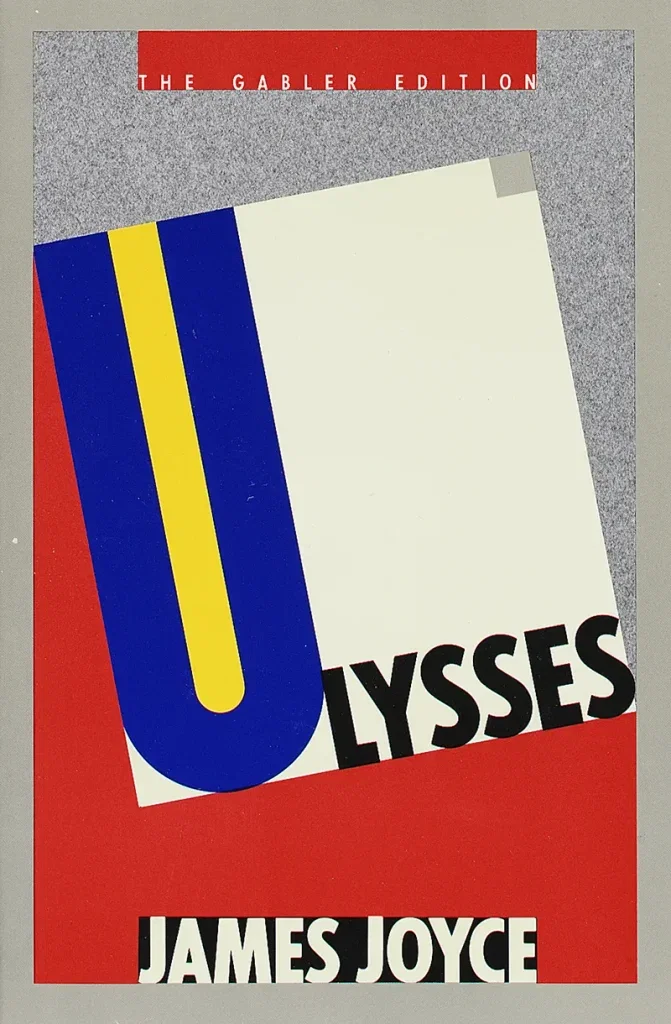
Maybe you’ve read James Joyce’s story collection,Dubliners(1914). Maybe you’ve read his first novel,A Portrait of the Artist as a Young Man(1916). Maybe you’ve dipped into neither of those classics but have wondered about his second novel,Ulysses(1922). People familiar or unfamiliar with it, filled with loving or loathing for it, express opinions about the readability or worth ofUlysses, but no one has ever said this towering example of Western literary modernism is easy to get through or comprehend.
Joyce told the novel’s French translator that he’d buried Easter eggs in the text:“I’ve put in so many enigmas and puzzles that it will keep the professors busy for centuries arguing over what I meant, and that is the only way of insuring one’s immortality”. Well, that’s one way. Another would be to write a straightforward narrative that engages and enlightens readers to the point that your book becomes a classic that survives culture wars.
As of 2026, James Joyce had accomplished this latter feat withDublinersandA Portrait of the Artist as a Young Man, which aren’t in danger of being forgotten. Indeed, they’re still encountered avidly by general readers, and still assigned in classrooms. For some readers, Joyce’s trail ends with one or the other of these works of fiction—fewer have sampled his poetry, his play, or his nonfiction. Dubliners and A Portrait of the Artist as a Young Man present challenges, but just as Joyce pushed forward from the stylistic innovations of his stories into the stylistic innovations of his first novel, so he continued pushing as he crafted his second novel,Ulysses.
Then there’s Joyce’s next and final book, the uncategorizable, multilingualFinnegans Wake(1939). Years ago, an English professor who loved Joyce and edited an edition ofA Portrait of the Artist as a Young Mantold me that “you can’t readFinnegans Wake”. He meant that not as a criticism of the book but as an observation based on careful attention. You can’t readFinnegans Wakein a conventional sense. You can only experience the text and do things with it. However, that now-deceased Joycean and I hereby declare that you, PopMatters enthusiast, can readUlysses. Ta-da! It’s that easy—if only. But yes, I said yes, you can read it. You can also do things with it. First, you need to relax. Take a deep breath. Then…
Take That First Step through the Joycean Portal
When you read a straightforward narrative, you may assume you’ll understand every word, perhaps with the help of a dictionary. Still, as language and culture change over time, aspects of that narrative may become obscure. Dictionaries, encyclopedias, footnotes, and other scholarly apparatus may make those parts of the text accessible to you.
When you readUlysses, by contrast, no amount of expertise will enable you to comprehend everything. If you go into this book expecting to understand every word, nuance, or reference, you’ll most likely end up frustrated, even to the point of stopping. An English Department graduate student I used to know took one look at an annotated excerpt ofUlyssesand threw the anthology across the room. That English professor I mentioned above, who helped makeA Portrait of the Artist as a Young Manmore accessible for 21st-century readers, told me that annotating excerpts fromUlysseswas “the hardest thing” he’d “ever done”.
Ulyssespresents difficulties by its nature because, in much of it, James Joyce employs a technique calledstream of consciousness. That means he combines bits of storytelling, action, and events with words, thoughts, and impressions taking place within characters. Whether the perceiver in a particular section of the novel is the college student Stephen Dedalus (Joyce’s alter ego, returning fromA Portrait of the Artist as a Young Man), the advertising salesman Leopold Bloom, another character, an unnamed narrator, or simply the text, Joyce’s language reflects shifting consciousnesses in addition to anchoring us in a specific place and time.
The place is Joyce’s native Dublin, Ireland, and the time is June 16, 1904. The story takes place throughout the day, beginning with Dedalus and his friends in the morning and ending with Bloom’s wife, Marion, known as Molly, in the wee hours. People travel around Dublin. They converse. Dedalus and Bloom encounter one another in nightgowns, in Dublin’s red-light district, in a very long, surreal play-within-the-novel, which can be hugely entertaining if you’re in the mood and it doesn’t prove an insurmountable barrier.
Throughout the novel, you have concrete details to hang onto. Beyond that, you must navigate through sometimes smooth waters, sometimes choppy ones, sometimes complete sentences, sometimes run-ons, sometimes fragments. The most important thing to understand is that you can’t understand every particular, so don’t try to. Keep reading, grasping what you can, using the concrete details as life preservers.
Don’t expect a story conventionally told, but count on mostly recognizable people responding to situations. Some sexy stuff enlivens the sometimes dry discussions. (The sex and scatology resulted in a long-ago obscenity trial, and Ulysses was found innocent—of that charge.) Above all, enjoy Joyce’s delicious use of language, including his irreverent jokes.
There Is Pleasure to Be Had in Reading Ulysses
All readings are partial readings, in part determined and therefore limited by individual readers. As the theorist Wolfgang Iser notes inThe Implied Reader: Patterns of Communication in Prose Fiction from Bunyan to Beckett(1974), his phenomenological analysis of the reading process, “the convergence of text and reader brings the literary work into existence, and this convergence can never be precisely pinpointed, but must always remain virtual, as it is not to be identified either with the reality of the text or with the individual disposition of the reader.”
Few works of fiction that remain recognizable as fiction—that aren’t more properly considered avant-gardism, metafictional experimentalism, or sui generis collagism, the latter includingFinnegans Wake—make Iser’s point as clearly asUlyssesdoes. Joyce’s stylistic innovations, serving to incorporate indeterminacy into the text, guarantee the forestalling of closure.
In The Mechanic Muse (1987), the critic Hugh Kenner notes that “Joyce, as his work progressed, was at pains to maximize ambiguity, to throw back on us all the implications of the fact that the signs we decipher can be maddeningly mute”. Thus Ulysses defies readers not only to find meaning in it, but to follow its narrative lines, to know precisely what happens when and where (and by whom it is told). Readers may find themselves echoing Molly Bloom’s directive to her husband: “O, rocks! . . . Tell us in plain words” (4.343).
If initial readings ofUlyssesmost likely consist of attempts to get a general fix on the text, one of the pleasures of rereading the novel is being able to construct or direct a particular reading through selected attention. The richness of Joyce’s material, analogous to the potential richness of human consciousness, makes room for individual discovery.
InPrinciples of Psychology(1890), the psychologist and philosopher William James describes an infant’s initial experience of the world as “one great blooming, buzzing confusion”. For James, subsequent development entails two processes: one is discrimination, the separating out of elements. The other is association, the making of meaningful connections between elements. Putting aside whether James’s analysis was correct, let’s employ his verbiage and say that the reader entersUlyssesas an infant, then overcomes the “blooming, buzzing confusion” by working with the things found in the text. “Working with” here means making them concrete or linking them in associative chains.
Whether those chains free your mind or bind it is up to you, dear reader. You may choose to follow words, themes, images, events, and so on, as they develop or perhaps simply mutate over the course of the novel. In this way, coming to terms with the limitations of an individual reading by consciously determining a perspective, you become an explorer in this potentially overwhelming work of art. You hope to discover trails (ways paved, cleared, or at least made possible by the artist as a middle-aged man) through the profusion of detail and the confusion of consciousness.
The strands may illuminate the whole. Like the whole, however, they may not be linear, just as consciousness is not necessarily linear. You may follow a thread inUlyssesonly to find that thread dangling at some other end. Expect shaggy-dog stories within the “story”.
Consider the novel’s counterparts to the epic poem The Odyssey, by the ancient Greek poet Homer. The novel’s 18 episodes bear relationships to the adventures of Odysseus (his Greek name), or Ulysses (the Latin version), on his journey home, but those relationships extend just so far. If you know the parallels exist—if you’ve heard that Joyce referred to his novel’s “Calypso” episode, “Cyclops” episode, and so on—you can look for them. Although those names don’t appear in the novel and thus, are extra-textual, scholars and nonacademic Joyceans refer to them and consider theOdysseyparallels’ significance.
Alternatively, you can ignore James Joyce’s use ofTheOdyssey. Literature sometimes works that way. You could read, appreciate, even love Kurt Vonnegut’s 1961 novelMother Nightwithout knowing that its title refers to Goethe’sFaust, a 19th-century play. You’d simply wonder about or ponder the title’s meaning. As Joyce’s title indicates, the ancient Greek hero Odysseus/Ulysses—“a complicated man,” according to Emily Wilson’s translation of Homer’s epic—is somewhere in the text.
Okay, spoiler alert, or maybe open-secret alert: Leopold Bloom is a 20th-century “epic” “hero”. Beyond that, whether Homer’s work has metaphorical resonance and of what kind(s), you can choose to consider. Thenovel’s concluding section, episode 18, is known as “Penelope” after Odysseus’s/Ulysses’s wife, but it is also known as “Molly Bloom’s soliloquy” because it streams inside that character’s unique consciousness.
Your Odyssey Through Ulysses
One journey throughUlysses, available in an initial reading, extends from episode 4 through episode 17: Leopold Bloom leaves home, does things (however banal), and returns home. “He rests”, the text explains. “He has travelled” (17.230, in the 1986 Random House edition edited by Hans Walter Gabler; throughout this article, all oddities in the quotes are per this “corrected text” and thus presumably wordplay per Joyce, not errors).

Bloom’s traveling hasn’t been solely physical, for he has covered mental and emotional ground as well. In fact, Joyce details Bloom’s inner workings in far more detail than he describes Bloom’s movements from one point of Dublin to another.
So Bloom’s day represents an odyssey. Within it, as within him, you may find countless less obvious odysseys, inner explorations, wanderings, and quests that constitute his day more meaningfully than external events. Perhaps Bloom’s “truest” odysseys occur inside his head: the deeper measure of the man.
In brief, June 16, 1904—now celebrated by Joyceans as Bloomsday—has two salient features for Bloom. He attends the funeral of a friend, Patrick Dignam, and his wife, Molly, commits adultery with Hugh E. “Blazes” Boylan. How does Bloom respond to these disturbances in, as far as the novel indicates, an otherwise average day? He ponders them and their implications throughout the day. Planted in episode 4, these seeds creep like vines within and around Bloom’s overt adventures. As he considers the nature of mortality and the nature of sexuality, the two considerations intertwine. In essence, then, Bloom comes to terms with his own limitations, not as a reader but as a human being, by consciously determining a perspective.
By day’s end, back in bed with Molly, Bloom finally responds to his wife’s infidelity, and he does so with equanimity, mental and emotional calmness. “Equanimity?” (17.2177) asks the text, in an episode that consists of Q&A. The answer Ulysses has provided—the explanation for Bloom’s apparent mildness—comes in terms of nature: the nature of living, dying, changing beings.
In theDublinersstory “The Dead”, a husband learns of his wife’s youthful, premarital love affair and experiences a similar internal journey, which ends cosmically. In Ulysses, reading Bloom’s consciousness, an unnamed narrator summarizes, extrapolates, and pokes fun at Bloom’s understanding of Molly’s affair: “As as natural as any and every natural act of a nature expressed or understood executed in a natured nature by natural creatures in accordance with his, her and their natured natures, of dissimilar similarity. As not so calamitous as a cataclysmic annihilation of the planet in consequence of a collision with a dark sun. . . . As not more abnormal than all other parallel processes of adaptation to altered conditions of existence, resulting in a reciprocal equilibrium between the bodily organism and its attendant circumstances, foods, beverages, acquires habits, indulged inclinations, significant diseases. As more than inevitable, irreparable.”
In other words, it’s not unusual. It’s what living things do, more or less. It’s not the end of the world. Besides, it may not be within Bloom’s power to stop it. Bloom decides to step out of the way and allow the thing to happen as it will and as it must, given the nature of the natural things and persons involved. Molly will be Molly, as Boylan will be Boylan, as Bloom will be Bloom.
Is this a reasonable position? Does Bloom’s equanimity represent the sane, in fact enlightened, response, for Bloom as Bloom, to his wife’s sexuality?(The scandalous content of Molly’s soliloquy has made her practically synonymous with sex positivity.)Or is Bloom simply a nebbish, lapsing into rather than choosing inaction? To answer this question, which runs throughUlyssesas a leitmotif, you need to understand Bloom’s nature.
The text has been delivering information in various forms about that nature, but it never tells you what to conclude. He does this, he thinks that, and what does that make him? The language quoted above reflects Bloom’s consciousness but not his exact thoughts. That is, Joyce is playing with narrative perspective, as he does throughoutUlysses. The text comes from a narrator not within the character’s mind or looking over his shoulder but more somewhere inside his “soul”. Bloom might not think or speak exactly this way, but some of these words might be his and the overall tone represents him, even if the overriding playfulness—the sense that different kinds of language can be used for different purposes simultaneously—is Joyce’s.
To appreciate the episodes’ different narrative types, including the parodic, it’s essential to understand the author’s playfulness. Sometimes he challenges you to the point of annoying you. Instead of losing patience, you might ask yourself what the text is telling you about the characters or fiction or life.
James Joyce on Sex, Death and Life
According to the text, Bloom represents “the scientific” (17.560) temperament. He believes “he had frequented the university of life” (17.555‒556). From these phrases, you can infer that Bloom feels capable of learning from experience and that, given a problem, he will seek to solve it inductively and to some extent dispassionately.
Does Bloom solve the problem of Molly’s infidelity inductively and to some extent dispassionately? Does he learn something—about sex, death, life, Molly, himself, all or none of the above—during the day? Does Bloom’s equanimity in episode 17, where it follows “envy, jealousy, abnegation” (17.2155), represent the provisional end of a train of thought? What part do you, as exploratory reader, play in construing or constructing that particular journey from the available fragments?
To begin the investigation means establishing a starting point—a point in some sense different from equanimity—and various points between your termini. The first is easy to find; begin where Bloom begins, in episode 4. In a morning funk, Bloom moves within ten lines from the extreme low of“Dead: an old woman’s: the gray sunken cunt of the world” (4.227‒228)and“Desolation” (4.299)to the affirmative “Be near her ample bed warmed flesh. Yes, yes”—the latter a foreshadowing of Molly’s soliloquy at the novel’s end and her famous, oft-quoted “yes I said yes I will Yes” (18.1608‒1609).
In episode 4, sex appears as Bloom’s immediate response to loss, the opposite of death. By contrast, Bloom’s “As more than inevitable, irreparable” of episode 17 applies equally well to sexanddeath. Thus Bloom seems to spend the episodes between 4 and 17 coming to terms with polarities that become a continuum. Bloom’s acknowledgment of the continuum represents part of his equanimity, since that equanimity would not have been possible given the polarities of episode 4. Given life in its flux, meanwhile, Bloom’s response, his calm acceptance, makes some sense.
What Will You Make of James Joyce’s Bloom?
Two letters and a card lay on the hallfloor. He stooped and gathered them. Mrs Marion Bloom. His quickened heart slowed at once. Bold hand. Mrs Marion.
—Poldy!
Entering the bedroom he halfclosed his eyes and walked through the warm yellow twilight towards her tousled head.
—Who are the letters for?
He looked at them. Mullingar. Milly.
—A letter for me from Milly, he said carefully, and a card for you. And a letter for you. (4.243‒252)
“His quickened heart slowed at once” alerts you to Bloom’s concern. He carries missives, you learn eventually, from Molly’s lover (Blazes Boylan) and the Blooms’ daughter, Millicent, known as Milly. At age 15, Milly is living in the Irish town of Mullingar and learning the photography business. In all innocence, Milly writes to her father, “Dearest Papli”
(4.397): “There is a young student comes here some evenings named Bannon his cousins or something are big swells and he sings Boylan’s (I was on the pop of writing Blazes Boylan’s) song about those seaside girls. Tell him silly Milly sends my best respects” (4.406‒409).
Bloom has already remembered “Sex breaking out even then. Pert little piece she was” (4.295)—careful there, Dad—and he now considers his role in the life and sex life of his offspring. Should he intervene between Milly and the young student, Bannon?
Oh, well: she knows how to mind herself. But if not? No, nothing has happened. Of course it might. Wait in any case until it does. A wild piece of goods. Her slim legs running up the staircase. Destiny. Ripening now. Vain: very.
He smiled with troubled affection at the kitchen window. (4.428‒432)
Faced with his wife’s adultery, Bloom considers his daughter’s sexuality. The two begin to fuse: “Milly too. Young kisses: the first. Far away now past. Mrs Marion” (4.441). As Bloom considers stepping in to prevent what he feels are the coming usurpations, he wonders, between the lines, if he can stop the sex from breaking out in either of the women central to his life. Can he exert control over nature—nature manifested in Molly and Milly?
In each case, Bloom chooses not to act. In theDublinersstory “A Little Cloud”, a husband and father, Little Chandler, comes to realize that his own character, his nature, has resulted in dissatisfaction with an uneventful, unpoetic life. Here Bloom seems like another Little Chandler, the “victim” of inertial despair: “A soft qualm, regret, flowed down his backbone, increasing. Will happen, yes. Prevent. Useless: can’t move. Girl’s sweet light lips. Will happen too. He felt the flowing qualm spread over him. Useless to move now” (4.447‒449).
Over the course of the novel, Bloom travels from “qualm”, uneasiness, to “equanimity”, calmness. The episodes in which he does so, 5 through 17—at least the sections of them conveying Bloom’s thoughts and feelings or his fellow Dubliners’ reactions to Bloom—provide as vehement a defense of this inaction as you will likely find in such an “objective” work of fiction, one that presents and doesn’t overtly judge.
By following Bloom and being privy to his thoughts and feelings, intimately connected with the morning’s events as those thoughts are, you may come to appreciate Bloom’s take on the world. You won’t necessarily “understand” Bloom; his nature remains too changeable to pin down. He is what he does and what he thinks and what he feels and what you make of all three: reader of the inner Bloom, forced to fill in his blanks, you manifest him as you make sense of the text.
Consider How Joyce Contemplates the Mind in Action
“Metempsychosis”, Bloom says to Molly in episode 4, “frowning. It’s Greek: from the Greek. That means the transmigration of souls” (4.341‒342).
This line of Bloom’s thought begins in episode 4, and it dovetails with his concerns about Molly’s and Molly’s sexuality and his considerations of death. These three notions—sex, death, and the transmigration of souls—set up echoes within Bloom’s mind that continue, growing ever more distorted.
Within Bloom’s section of episode 13, for instance, there’s a concatenation of thoughts regarding Molly and Milly and metempsychosis:
June that was too I wooed. The year returns. History repeats itself. Ye crags and peaks. I’m with you once again. Life, love, voyage round your own little world.
(13.1092‒1094)I am a fool perhaps. He gets the plums, and I the plumstones. Where I come in. All that old hill has seen. Names change: that’s all. Lovers: yum yum. (13.1098‒1099)
My youth. Only once it comes. Or hers. Take the train there tomorrow. No. (13.1102‒1103)
Curious she an only child, I an only child. So it returns. Think you’re escaping and run into yourself. Longest way round is the shortest way home. And just when he and she. (13.1109‒1111)
“Names change: that’s all” echoes Bloom’s “Those are names” (11.1069), which hearkens back to “All dead names” from Bloom’s morning funk. Bloom doesn’t actively recall his earlier thoughts; you connect them or not.
In the same way, the word “metempsychosis” doesn’t appear in episode 13, nor does Bloom have “the transmigration of souls” per se in mind when he thinks, “So it returns”. Bloom’s constant returning to repetition, to the way one thing becomes or resembles another, to the way features recur, betrays the traces of “metempsychosis”.
So the point isn’t that Bloom decides, “Today I’ll ponder the natures of Molly and Milly and metempsychosis”, but that, given the prominence of those “names” during the morning, and given his heightened sense of mortality after Paddy Dignam’s death, Bloom can’t help but think about these loosely linked phenomena. Neither can you, Bloom’s re-creator, in making connections between disparate textual elements. The connections, then, aren’t linear but associative, like nearly every connection inUlysses, like, again, theOdysseyparallels Joyce used to organize the parts.
Bloom’s internal odyssey begins in episode 4 and provisionally concludes in episode 17, but can what happens between those two points meaningfully be called “events” or “adventures”? Does Bloom encounter ideas the way he encounters, for example, a character called “the citizen” in episode 12? It’s fair to say so, sinceUlysses’s odyssey, this Odysseus/Ulysses’s odyssey, physical and otherwise, is wholly associative and subject to the shifting streams of consciousness, Bloom’s and each reader’s.
Plotting points on that odyssey yields not a line but a grid, and when placed over what the reader knows in more precise terms about Bloom, that grid yields a picture of equanimity. That picture isn’t entirely representational. It may nonetheless be as realistic a depiction of the mind in action as fiction can provide.
Allow Yourself to Think Fluidly
“Always passing, the stream of life”, Bloom muses, on the street, heading for his bath, “which in the stream of life we trace is dearer thaaan them all” 5.563‒564). Posed in this half-statement, half-question, “the stream of life” enables Bloom to think in terms of fluidity: “Molly. Milly. Same thing watered down. . . . Still, she’s a dear girl. Soon be a woman. Mullingar. Dearest Papli. Young student. Yes, yes: a woman too. Life, life” (6.87‒90).
He means life as change, as movement from one state to another, as transformation. Or is that transmigration? “In the midst of death we are in life”, Bloom thinks at Dignam’s funeral. “Both ends meet.”. Although transmigration of souls means change in death, it also signifies the essential mutability of human being, even in death: “Of course the cells or whatever they are go on living. Changing about. Live for ever practically” (6.780‒781).
Inevitably, irreparably, Dignam’s death, Molly’s sexuality, Milly’s life, and metempsychosis lead Bloom to think of the Blooms’ deceased son. “If little Rudy had lived” (6.75), he would not have been Bloom, but he would have carried within him parts of Bloom. Types reappear, as parts, cells, roles pass from one to another. “If we were all suddenly someone else” (6.836), what would that say about ourselves? Would anything change, or would everythingcontinueto change, in life as in death? Near the end of episode 6, following these ruminations, Bloom responds to death in a manner far less panic-stricken than his response had been in episode 4: “Plenty to see and hear and feel yet. Feel live warm beings near you. Let them sleep in their magotty beds. They are not going to get me this innings. Warm beds. Warm fullblooded life” (6.1004‒1006).
By episode 7, at work in the newspaper office, Bloom thinks in considerably less sanguine terms: “Justice it means but it’s everybody eating everyone else. That’s what life is after all” (7.213‒214). Consuming and consummatory: Those “magotty beds” may not be so far off. For the passing of one thing into another, whether souls or sex organs, need not be passive. Should he be? “I could go home still”, Bloom tells himself. “Just to see: before: dressing. No. Here. No” (17.230‒231). He considers taking action to prevent his being cuckolded, then immediately rejects the idea. By this time the text has demonstrated that aggression won’t become part of Bloom’s nature, however mutable that nature might be.
Once out of the office, Bloom reviews his thoughts of the morning: “How can you own water really? It’s always flowing in a stream, never the same, which in the stream of life we trace. Because life is a stream. . . . Par it’s Greek: parallel, parallax. Met him pike hoses she called it till I told her about the transmigration” (8.93‒113).
Episode 8, as Bloom’s spirits drop and he falls victim to lunchtime inertia (8.494), contains many references to the passage of time and to Bloom’s staying put (8.591, 633, 791, 853, for instance). His view of the world has changed since the morning, though: If the horror in episode 4 is “a barren land, bare waste” (4.219), then the futility of episode 8 is “a cityful passing away, other cityful coming, passing away too: other coming on, passing on” (8.484‒485).
This passage sounds like birth, death, and metempsychosis as a nullifying process, with change so constant that it renders individual life meaningless. What, after all, “If we were all suddenly somebody else”? “No-one is anything” (8.493). No wonder that amid his remembrance of things past and passing Bloom questions even the stability of self: “I was happier then. Or was that I? Or am I now I? . . . Can’t bring back time. Like holding water in your hand” (8.608‒611).
Experience the Dangers of Singing a Love Song
In Episode 4, Molly tells her husband that at a public performance she and Boylan will be singing “Love’s Old Sweet Song” (4.314). Her husband knows that even sooner they’ll be privately performing love’s old sweet song while he’s away. Milly’s letter to Bloom, meanwhile, mentions “a young student . . . sings Boylan’s . . . song about those seaside girls”. Both of these songs appear, fragmented, within episode 11 (681, 688, for instance), which begins with a fugue and features music—for example, “air”, meaning tune, melody, song—throughout:
—Which air is that? asked Leopold Bloom.
—All is lost now.
If Bloom’s inner struggles of the morning, concerning Molly and Milly and life and death, have constituted a battle, then in episode 11 Bloom has given up the fight. His consciousness ranges through action, sexuality, nature, music, inaction:
Fall, surrender, lost.
Bloom bent leopold ear turning a fringe of doyley down under the vase. Order. Yes, I remember. Lovely air. In sleep she went to him. Innocence in the moon. Brave. Don’t know their danger. Still hold her back. Call name. Touch water. Jingle jaunty. Too late. She longed to go. That’s why. Woman. As easy stop the sea. Yes: all is lost. (11.636‒641)
Without a doubt and without interference from Bloom, Boylan will visit Molly as the young student will visit Milly. “How can you own water really?” “Life, life” rushes on:
I too. Last of my race. Milly young student. Well, my fault perhaps. No son. Rudy. Too late now. Or if not? If still?
He bore no hate.
Hate. Love. Those are names. Rudy. Soon I am old. (11.1066‒1069)
“Molly” and “Milly” are names too: labels for people who aren’t Leopold, who remain beyond Leopold. Leopold may satisfy his desire for order by adjusting a fringe of doyley—a gesture that echoes Bloom’s straightening the bedspread during his early exchange with Molly (4.309)—but beyond arm’s reach he has little power.
Things, beings, follow their natures, which names, labels, language can’t control. Rudy had a name, but barely lived, for instance. Bloom couldn’t prevent Rudy’s death (or Paddy Dignam’s). If we say that we love or hate, can those names do justice to complex feelings that shift from moment to moment?
How Shall We Confront Hatred?
—But it’s no use, says [Bloom]. Force, hatred, history, all that. That’s not life for men and women, insult and hatred. And everybody knows that it’s the very opposite of that that is really life.
—What? says Alf.
—Love, says Bloom. I mean the opposite of hatred. (12.1481‒1485)
The inadequacy of the words is palpable. Everybody doesn’t know.
In episode 12,which parallels Odysseus’s/Ulysses’s encounter with the Cyclops in Homer, Bloom spends time in a pub, where he confrontsthe xenophobic, antisemitic “citizen”. How could Bloom, who is Jewish, convey to others the reverberations set up within himself by this confrontation and by his own words “hatred” and “love”? Pricked, he sensitively struggles with ideas, hardly the same man who, in the morning, misogynistically thought “Dead: an old woman’s: the gray sunken cunt of the world” (4.227‒228).
Facing the close-minded,Bloom internally digs into the matters on which he has been ruminating through the day, and draws out of them a meaning. Here, no “soft qualm, regret, flow[s] down his backbone increasing” (4.447). Instead, he takes a verbal stand, however futile, against the citizen. Yes, he indicates, once more between the lines, change can bring chaos and meaninglessness, but perhaps a more fruitful change starts here, with me and within.
The citizen responds sarcastically: “—A new apostle to the gentiles, says the citizen. Universal love” (12.1489).
Although the context is different and the names have changed, Bloom acts in this episode for much the same reason he didn’t act before. In episode 13, his internal struggle takes on epic proportions:
Back of everything magnetism. Earth for instance pulling this and being pulled. That causes movement. And time, well that’s the time the movement takes. Then if one thing stopped the whole ghesabo would stop bit by bit. Because it’s all arranged. . . . Woman and man, that is. Fork and steel. Molly, he. (13.987‒993)
In the name of love, he stands up. Bowing to the forces of attraction, he stands aside.
Relatable Anxieties Grown Out of Control
In episode 14, a baby is born. Characters including Bloom and his spiritually adopted son (14.271‒276), Stephen Dedalus, engage in freewheeling discussions. Joyce uses various prose styles to encapsulate the history of the English language. (Fun, right?)
The text parodies Bloom’s earlier philosophizing: “What is the age of the soul of man? As she hath the virtue of the chameleon to change her hue at every new approach, to be gay with the merry and mournful with the downcast, so too is her age changeable as her mood” (14.1038‒1041).
It reports that“There, as in a retrospective arrangement, a mirror within a mirror (hey, presto!), he beholdeth himself” (14.1044‒1045). In this trick mirror, Bloom’sspeech to Molly in episode 4 concerning reincarnation (4.362‒365, for instance) becomes: “And lo, wonder of metempsychosis, it is she, the everlasting bride, harbinger of the day star, the bride, ever virgin. It is she, Martha, thou lost one, Millicent, the young, the dear, the radiant” (14.1099‒1102).
Then, through the wonder of metempsychosis or not, Bloom’s consciousness and identity undergo their most radical transformations in episode 15, the play-within-the-novel. Here, in nighttown—again, the redlight district, where libido is concretized—Bloom’s daytime concerns appear undisguised, no longer fragmented but made flesh:
BLOOM
Molly!
MARION
Welly? Mrs Marion from this out, my dear man, when you speak to me. (satirically) Has poor little hubby cold feet waiting so long? (15.303‒307)
—which becomes:
BLOOM
I can give you . . . I mean as your business menagerer . . Mrs Marion . . . . . if you . . . .
MARION
So you notice some change? (her hands passing slowly over her trinketed stomacher a slow friendly mockery in her eyes) O Poldy, Poldy, you are a poor old stick in the mud! Go and see life. See the wide world. (15.224‒330)
—which reaches one of many terrible climaxes in:
BLOOM
(in tattered mocassins with a rusty fowlingpiece, tiptoeing, finger tipping, his haggard bony bearded face peering through the diamond panes, cries out) I see her! It’s she! The first night at Mat Dillons! But that dress, the green! And her hair is dyed gold and he . . .
BELLO
(laughs mockingly) That’s your daughter, you owl, with a Mullingar student. (15.3159‒3166)
“Changed, eh?” (15.3173) says Bello when Milly appears. Bello is in fact a changed form, Bloom’s imagined version of the female prostitute Bella Cohen, and he torments Bloom during the latter’s masochistic fantasy.
Change hurts in episode 15, where the dream-illogical equivalent of metempsychosis transforms one thing into another, before death, with incalculable rapidity. “If we were all somebody else”(6.836), Bloom mused earlier, and episode 15 demonstrates that all hell would break loose. By contrast, nature seems tame in its power to transform.
If episode 15 represents an uprising of the subconscious, then these are Bloom’s anxieties grown out of control. If throughoutUlyssesBloom’s stream of consciousness represents his internal odyssey, then episode 15 is where his internal odyssey meets and matches his physical journey. Subjective and objective views of “reality” fuse in a synthesis that produces monsters, as Bloom’s inner struggle spills out in a whirlwind of self-accusation. He comes under attack in nighttown for a long list of vices, and the small amount of praise he receives sounds like a parody of equanimity:
DR DIXON
(reads a bill of health) Professor Bloom is a finished example of the new womanly man. His moral nature is simple and loveable. Many have found him a dear man, a dear person. He is a rather quaint fellow on the whole, coy though not feebleminded in the medical sense. (15.1797‒1801)
Something shifts within Bloom, however. As though freed from his inner monsters by the nightmare of nighttown, Bloom in episode 16 speaks with the voice of reason: “Of course, Mr B proceeded to stipulate, you must look at both sides of the question. . . . It’s all very fine to boast of mutual superiority but what about mutual equality. I resent violence and intolerance in any shape or form. It never reaches anything or stops anything” (16.1094‒1101).
Gather Your Associations for Ulysses
As things recur, they change: “history repeating itself with a difference” (16.1525‒1526), as an unnamed narrator puts it. “Mrs Marion” on an envelope in episode 4 differs from “Mrs Marion” in Bloom’s head during episode 11, then differs from “Mrs Marion” said by a Molly-figure in the nightmare of nighttown in episode 15. Terms take on new meanings depending on their placements within sentences, paragraphs, interior monologues, episodes, novels.
The parts never convey the effect of the whole. A passage quoted out of context(s), taken away from the swirling, vertiginous experience ofUlysses, may sound ugly or beautiful but loses nearly all the resonance. Joyce was working with reverberation, what Bloom thinks of as “Beauty of music you must hear twice” (11.1060).
Because this form of storytelling is poetry in motion, it must read differently within each of us, each time we put together the pieces. Yet Joyce countered that built-in indeterminacy with recognizable structures. Those elements recur, but even if you identify them, you might not put your finger on exactly what they signify. Leopold Bloom is one such structure. Like love and hate, it is a name,but names change. The ancestral name Virag becomes Bloom (16.953), and—hey, presto!—Bloom becomes Boom when his name is misspelled in an account of Dignam’s funeral (16.1260). Each time the signifier appears, in whatever guise, you develop another association.
The same process affects your understandings of Molly, Milly, and metempsychosis. As they become rubrics under which you gather associations, you see these terms in different terms. They in turn affect your readings of Bloom, who takes many forms but remains difficult to visualize. Your mental image of him isn’t mine, Joyce’s, or your Aunt Tilly’s.
Bloom reaches points, comes to split-second understandings, only to change his position several lines or several episodes later. Sometimes he steps backward to earlier positions, as in the fairly late episode 11: “Mrs Marion. Met him pike hoses. Smell of burn. Of Paul de Kock. Nice name he” (11.500‒501)—with the pun on that name intended, to be sure. These internal shifts lead up to Bloom’s equanimity in episode 17; they prepare you, as you journey through Bloom’s mind, to understand his understanding.
Bloom may not draw hard truths from the strands of his day. With those strands, he weaves—like an inverse Penelope inThe Odyssey, who is weaving to fend off her rapacious suitors while her husband is away—something close to a philosophy of life.Finally, in episode 17, those strands of Bloom’s thought take on universal proportions, as in “the apathy of the stars” (17.2226).That’s just one trail to trace inUlysses, but if that tracing process sounds intriguing, your readerly work may be cut out for you. Revel in the journey that is James Joyce’s Ulysses, and you will be rewarded.