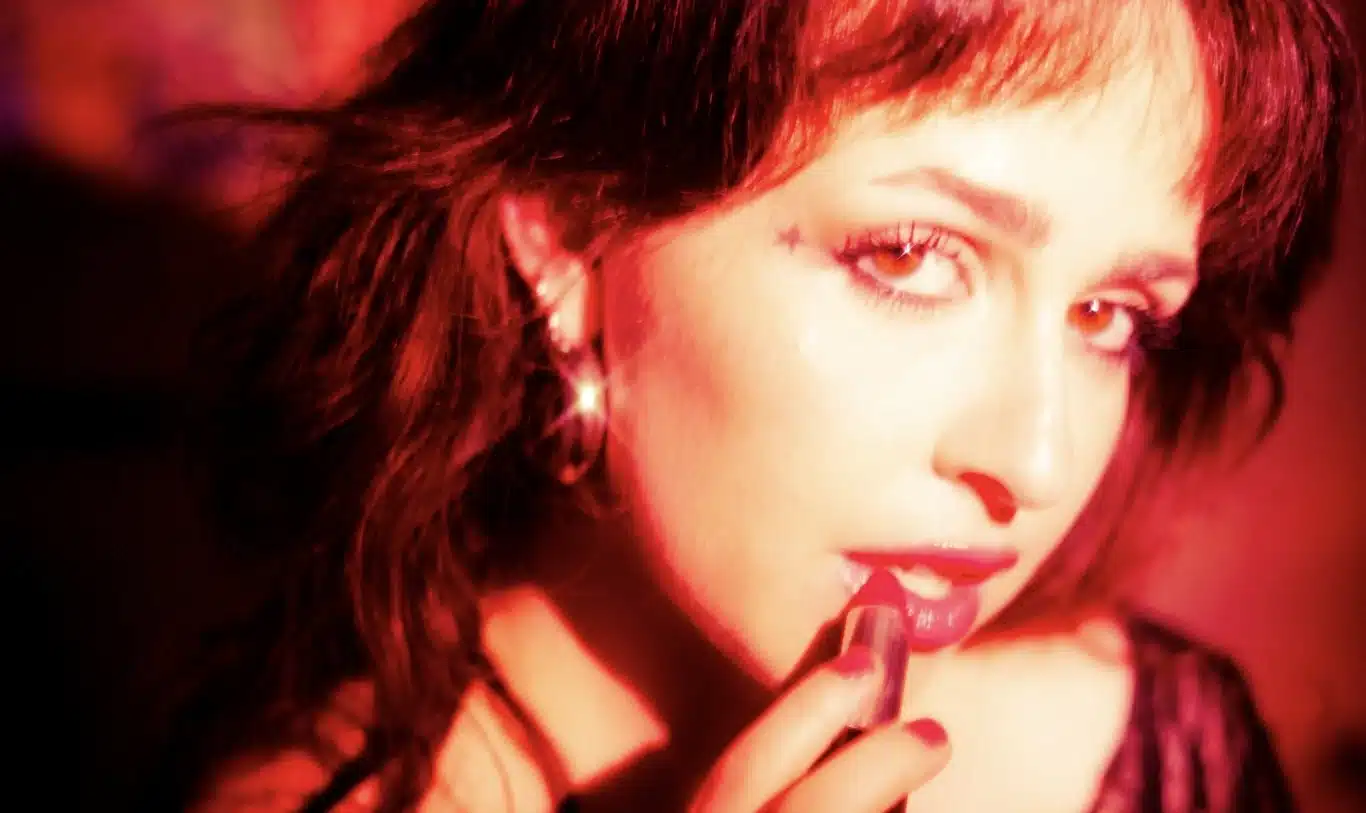
Tess Clare has been putting out records since 2018. Two EPs, a run of singles, a couple of million streams, playlist support from Spotify and Apple, a festival slot in Atlanta on a bill with Billie Eilish and the 1975, by ordinary measures that looks like progress. What it did not look like, to her, was permission. She had convinced herself that a debut album required a threshold she had not crossed, a bigger following, a label, a tour behind her, and that making one before then would be a waste. She has since said the album saved her from burnout. That’s blunter and more useful than most artists admit about a first record.
Diva 98 is the result: 13 tracks made independently, and its subject is right there in the title. The word has trailed Clare since she was a kid. A middle-school choir director used it because she was loud and kept asking for solos. Her high school class voted her Biggest Diva. She has described the shift in three stages, and it is a good three-act structure: as a child the word made her angry, by high school she took it as proof that people saw her, and now it is her Instagram handle.
The title track came out of a low period, written while Clare was talking about herself in the past tense, about how she used to be a diva, and hearing how much she had given away in saying it. What she felt was not nostalgia but something closer to regret, that she had spent her early 20s apologising for taking up room under the impression it made her a better artist. It did not. It gave her imposter syndrome. The song is her taking the word back, and it is the strongest thing here because the stakes in it are legible.
Sonically, Tess Clare has been open about the two artists who matter most: Charli XCX and Prince. Not for how they sound, but for how they build. Both constructed whole worlds around their records, alternate realities with their own logic, and neither let commercial performance dictate the terms. That ambition is audible across Diva 98, which reaches for theatricality without much hedging. “Hourglass” opens on impossible standards.
“Never Gonna Not Want More” is the album’s clearest thesis, so much so that when an interviewer recently asked Clare what success looks like now, she quoted her own song title back at them and called making peace with that hunger the closest she gets to peace at all. “One of Your Ghosts” turns being written out of someone’s story into a refusal to go quietly. “Not Here for You” is the most straightforwardly propulsive thing on the record, synth-driven and built for a room. “Hit List” is where she lets the alter ego run unsupervised, and “It Girl” turns anxious attachment into something you can dance to, which is a harder trick than it sounds.
The last three tracks are where the album gets genuinely interesting, and nobody seems to have noticed they work as a suite. “Paris (All That I Could Be)” is about lives not lived. “La Vie en Rose” follows it, her version of a song written in 1945. Then “Anemoia”, a coined word meaning nostalgia for a time you never experienced. Three songs in a row about longing for something that was never yours. On an album otherwise concerned with claiming what is, that reversal gives the ending a weight the middle stretch does not always earn.
Which is the honest reservation. Thirteen tracks about wanting more eventually run into the limits of the subject, because wanting does not develop the way a story does. Several of the mid-album songs make the same argument in a different key, and a firmer edit would have left something sharper. The Edith Piaf cover is also a strange call on a debut about self-definition; it is sung well, but an album this committed to becoming yourself doesn’t obviously need somebody else’s standard in the middle of it. Invoking Ethel Cain, Caroline Polachek, and Prince in your press notes sets a bar that an independently made first album isn’t always going to clear.
Still, Clare knows what she is doing, and the closing track proves it. She wrote “Anemoia” after she thought Diva 98 was finished, found it pointed somewhere else entirely, followed it, and has already made a second album on the other side. So the debut ends by opening a door out of itself. That is either overconfident or exactly the point, depending on how you feel about a record that describes its own release as a solo wedding.
Tess Clare is not asking anymore. That much comes through.