There are artists who create objects, and then there are artists who create worlds.
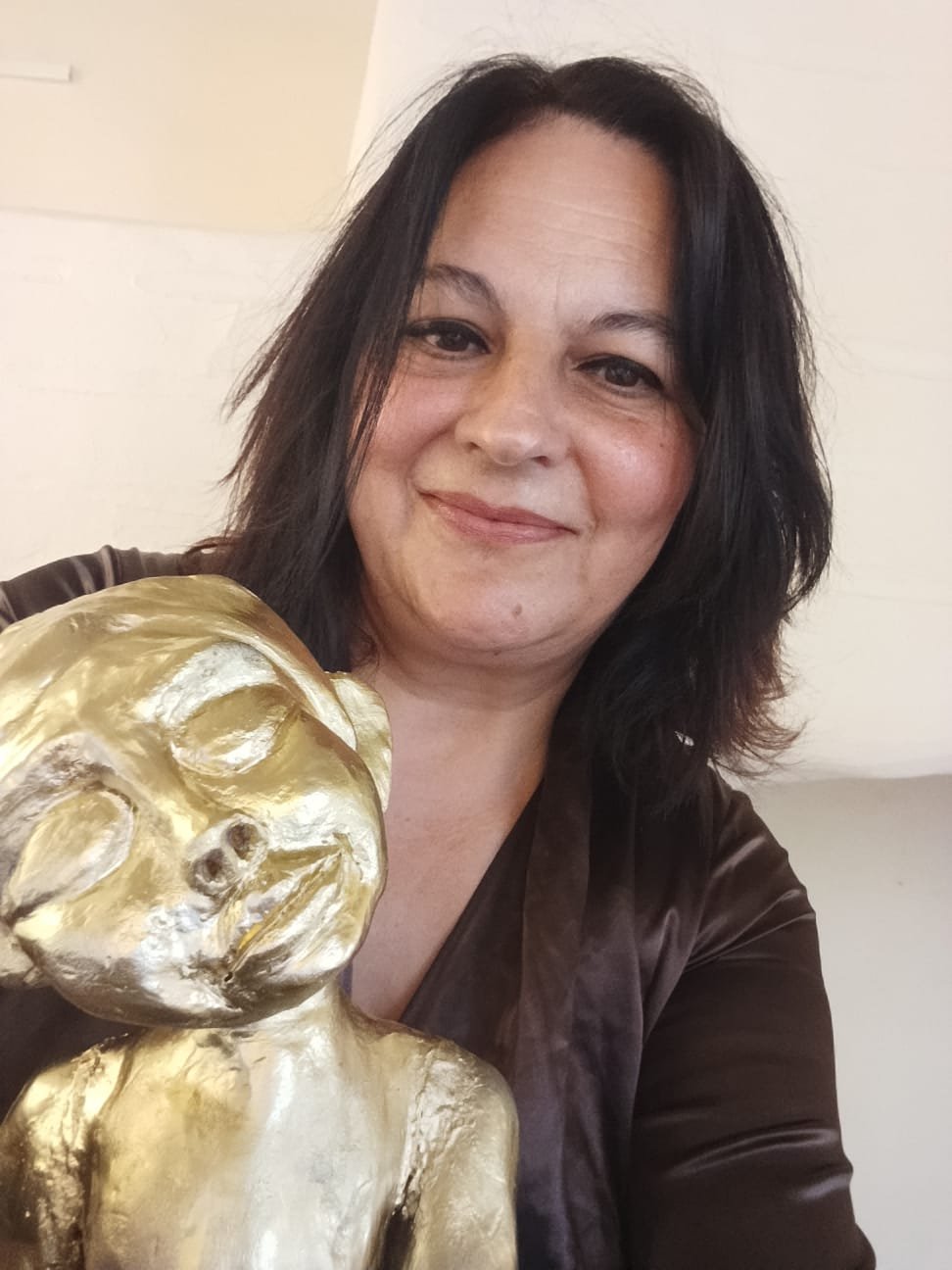
Nicol Breeze belongs to the second category.
Her sculptures exist at the intersection of craftsmanship, mythology, cultural memory, beauty, and transformation. Rather than simply shaping clay into recognizable forms, Breeze approaches sculpture as a conversation between the past and the present—a way of asking how ancient stories continue to influence the way we understand ourselves and the world around us.
Her body of work, “Treasures,”reflects that philosophy with particular force.
Inspired by the cultural atmosphere of Greece and the enduring mythology of the Aegean, “Treasures” explores what happens when traditional artistic techniques encounter a contemporary imagination. The result is work that feels simultaneously rooted in history and completely alive in the present.
At the center of Breeze’s artistic vision is a profound respect for material.
Clay is not merely something to be shaped.
It carries memory.
Every mark, texture, curve, surface, and imperfection becomes part of the story. Through classical techniques and carefully developed glazes, Breeze transforms raw material into sculptures that suggest something much larger than their physical dimensions.
They become vessels for ideas.
For memory.
For mythology.
For emotion.
And perhaps most importantly, for possibility.
The Meaning Behind a Treasure
The word treasure traditionally suggests something precious—something rare enough to be protected and valuable enough to be passed from one generation to another.
But Breeze’s interpretation reaches far beyond material wealth.
A treasure can be an ancient story.
It can be a tradition preserved by generations.
It can be a landscape that changes the way an artist sees.
It can be a memory that refuses to disappear.
It can even be an idea that survives long after the person who first imagined it is gone.
This broader understanding of treasure gives Breeze’s work its emotional foundation.
Her sculptures encourage viewers to consider what humanity chooses to preserve and why.
Why do certain myths survive thousands of years?
Why do particular images continue to fascinate us?
Why do ancient symbols repeatedly return in modern art?
And what happens when an artist takes those symbols and gives them a new identity?
For Breeze, the answer lies in transformation.
When Ancient Greece Meets the Contemporary World
Greek art has always possessed an extraordinary relationship with mythology.
The gods, heroes, monsters, spirits, and legendary creatures of ancient Greece were never simply characters in stories. They represented human fears, desires, conflicts, virtues, mysteries, and dreams.
Thousands of years later, those themes remain remarkably recognizable.
The modern world may look dramatically different from the Greece of antiquity, but humanity continues to wrestle with many of the same questions.
Who are we?
What are we afraid of?
What protects us?
What makes someone a hero?
Can something feared become something beautiful?
Can something ancient acquire a completely new meaning?
These questions resonate throughout Breeze’s approach to sculpture.
Rather than treating mythology as something frozen in the past, she allows it to evolve.
Her work suggests that mythology remains powerful precisely because it can be continually reinterpreted.
A symbol created centuries ago can mean one thing to an ancient civilization, something else to a poet, and something entirely personal to a contemporary artist.
That constant evolution is part of what makes mythology so enduring.
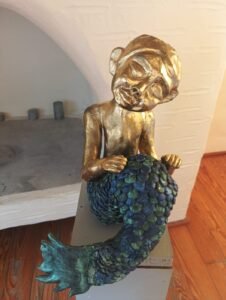
The Gorgon: From Monster to Symbol
Few mythological figures demonstrate this transformation more dramatically than the Gorgon.
For generations, the Gorgon has occupied a complicated place within Greek cultural imagination. The figure can evoke fear and danger, but also protection, strength, mystery, and resilience.
That complexity makes the Gorgon especially compelling within the artistic world of “Treasures.”
The Gorgon does not have to remain simply a monster.
She can become a symbol.
She can represent the confrontation between vulnerability and strength.
She can embody the idea that appearances do not always reveal the true nature of something.
And she can remind us that symbols change as societies change.
This reinterpretation connects Breeze’s work to a much larger Greek literary tradition.
Poets have repeatedly returned to mythological imagery to express contemporary experiences, transforming ancient figures into metaphors for modern life.
The Gorgon has appeared within the poetic worlds of writers such as Giorgos Seferis and Odysseas Elytis, while other Greek poets have similarly explored the relationship between mythology, nature, spirituality, and human transformation.
Breeze’s sculptures continue that conversation in another medium.
Where the poet uses language, the sculptor uses form.
Where the poet creates an image with words, the sculptor creates one through material.
Both are searching for the same elusive thing: a way to give shape to something that cannot easily be explained.
Sculpture as Memory
One of the most fascinating aspects of Breeze’s philosophy is her understanding of clay as a keeper of memory.
Clay begins as earth.
It is manipulated by human hands.
It absorbs impressions.
It is subjected to heat and transformed.
Once it becomes ceramic, the material has undergone an irreversible journey.
That process makes clay a particularly powerful metaphor for human experience.
People, like clay, are shaped by what surrounds them.
History leaves impressions.
Culture leaves impressions.
Family leaves impressions.
Place leaves impressions.
Time changes the surface.
And yet the original material remains part of what we ultimately become.
Breeze’s work embraces that contradiction.
The sculpture is new, but the techniques may be ancient.
The form is contemporary, but its references may stretch backward through centuries.
The finished piece exists in the present while carrying traces of the past.
That is the essence of artistic memory.
The Soul of Paros
Although Breeze’s artistic language reaches beyond any single location, the spirit of Parosprovides a particularly meaningful environment for her work.
Paros possesses an identity shaped by the sea, architecture, mythology, craftsmanship, light, and centuries of Greek cultural history.
It is a place where the ancient and contemporary coexist naturally.
The island’s visual character can be found in brilliant Aegean light, weathered stone, white architecture, deep blue water, and the textures created by time.
For an artist concerned with material and memory, such a landscape offers endless inspiration.
Breeze has described her sculptures as capturing the “hidden poetry of Paros.”
That idea is significant.
The hidden poetry of a place is not necessarily found in its most famous landmarks.
It can exist in the details.
A weathered surface.
A fragment of architecture.
A changing shadow.
The movement of the sea.
A story told by an older generation.
A myth that continues to live in the imagination.
These are the details that an artist learns to see.
Beauty Requires Craftsmanship
In an era dominated by digital imagery and instant visual content, sculpture offers something fundamentally different.
It takes time.
It requires patience.
It demands physical interaction with material.
The artist cannot simply press a button and produce the final object.
There is an intimate relationship between the hands and the material.
Breeze’s commitment to classical techniques reflects that relationship.
Her work demonstrates that tradition does not have to be the enemy of innovation.
In fact, tradition can become the foundation upon which innovation is built.
Learning the techniques of the past gives an artist the freedom to reinterpret them.
The result is not an imitation of history.
It is a continuation of history.
Beyond Sculpture
Breeze’s creative career also reflects a world that extends beyond the traditional boundaries of fine art.
Born in Athens in 1973, she has exhibited and competed in Greece and internationally, building a professional identity that connects artistic creation with entrepreneurship, design, luxury, and global cultural activity.
Her academic background is equally diverse. She holds an Executive MBAand a BSc in Business Administration and Economics from the University of Birmingham in the United Kingdom.
She works as a consultant and entrepreneur while maintaining her artistic practice, operating across Greece, the European Union, and the United States.
That combination of art and business provides an interesting dimension to her career.
Today’s successful artist often has to operate across multiple worlds.
The studio is only one part of the journey.
There are exhibitions, collaborations, collectors, designers, international cultural institutions, luxury brands, media, and global audiences.
Breeze’s career reflects that increasingly interconnected artistic landscape.
From Sculpture to High Jewelry
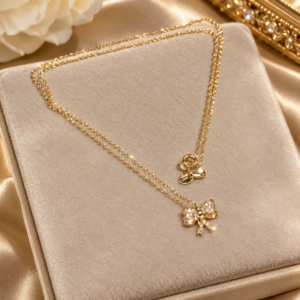
Perhaps nowhere is Breeze’s versatility more evident than in her work involving luxury design.
She has been commissioned to create the “Nationali Piloti Formula 1” High Jewelry collection, with the support of Prince Albert.
The connection between sculpture and jewelry is more natural than it might initially appear.
Both disciplines are concerned with form.
Both depend upon craftsmanship.
Both require an understanding of proportion, texture, balance, surface, and visual impact.
And both transform materials into objects capable of carrying meaning.
In that sense, moving between sculpture and high jewelry is not a departure from Breeze’s artistic philosophy.
It is an expansion of it.
An Artist Looking Toward the Future
Breeze’s growing international presence has also brought her work toward major global art platforms.
Her recent distinctions include selection for the UNSEEN exhibition associated with the Venice Biennaleand selection to participate in Art Basel Miami.
These opportunities place her work within an increasingly international conversation about contemporary art and design.
Yet the deeper story behind her work remains remarkably connected to its roots.
Athens.
Greece.
Mythology.
Craftsmanship.
The Aegean.
Ancient stories.
Contemporary imagination.
That combination may ultimately be what makes “Treasures” so compelling.
It does not attempt to separate the past from the future.
It brings them together.
The Real Treasure Is the Story
Perhaps the greatest strength of Breeze’s artistic philosophy is the understanding that an object becomes meaningful when it carries a story.
A sculpture can be beautiful, but beauty alone does not necessarily make it memorable.
Meaning gives beauty depth.
A myth gives a form history.
A cultural reference gives it context.
Craftsmanship gives it permanence.
And the viewer gives it personal interpretation.
That is where the idea of “Treasures” becomes especially powerful.
The true treasure may not be the physical sculpture at all.
It may be the story contained within it.
It may be the ancient memory that inspired it.
It may be the craftsmanship passed from one generation to another.
It may be the emotion a viewer experiences when standing before it.
Or it may simply be the realization that something created thousands of years ago can still inspire a contemporary artist today.
Keeping the Ancient Alive
Art has always been one of humanity’s most effective ways of remembering.
Long after civilizations change, their sculptures remain.
Long after languages evolve, their symbols survive.
Long after individual lives end, their creative work can continue speaking.
This is why sculpture matters.
It gives physical form to ideas that might otherwise disappear.
Breeze’s work participates in that ancient tradition while giving it a distinctly contemporary voice.
Her sculptures remind us that heritage is not something that belongs exclusively to museums or history books.
Heritage can be recreated.
Reinterpreted.
Questioned.
And transformed.
The past does not have to remain behind us.
It can become raw material for the future.
A World Made From Memory and Imagination
Ultimately, “Treasures” offers a window into the artistic world of Nicol Breeze—a world where clay becomes memory, mythology becomes contemporary expression, and craftsmanship becomes a bridge between generations.
Her sculptures invite us to look more carefully at the things we often take for granted.
The stories we inherit.
The symbols we recognize.
The landscapes that shape us.
The materials that surround us.
The traditions that survive because someone cared enough to continue them.
And the possibility that something created today might one day become part of someone else’s history.
That may be the most profound definition of a treasure.
Not something valuable because it is old.
Not something important because it is expensive.
But something meaningful enough that someone wants to carry it forward.
Through her sculpture, Nicol Breeze is doing precisely that.
She is taking fragments of Greek cultural memory, the timeless language of mythology, the discipline of classical craftsmanship, and the visual poetry of the Aegean—and transforming them into something that belongs not only to the past, but to the future.
That is where the real treasure lies: not simply in what we inherit, but in what we choose to create from it.
For information and professional inquiries:
Nikoletta Anagnostopoulou
Email: nikolettabreeze@gmail.com
Phone: +30 693 305 2663
Instagram: @breeze_high_jewellry