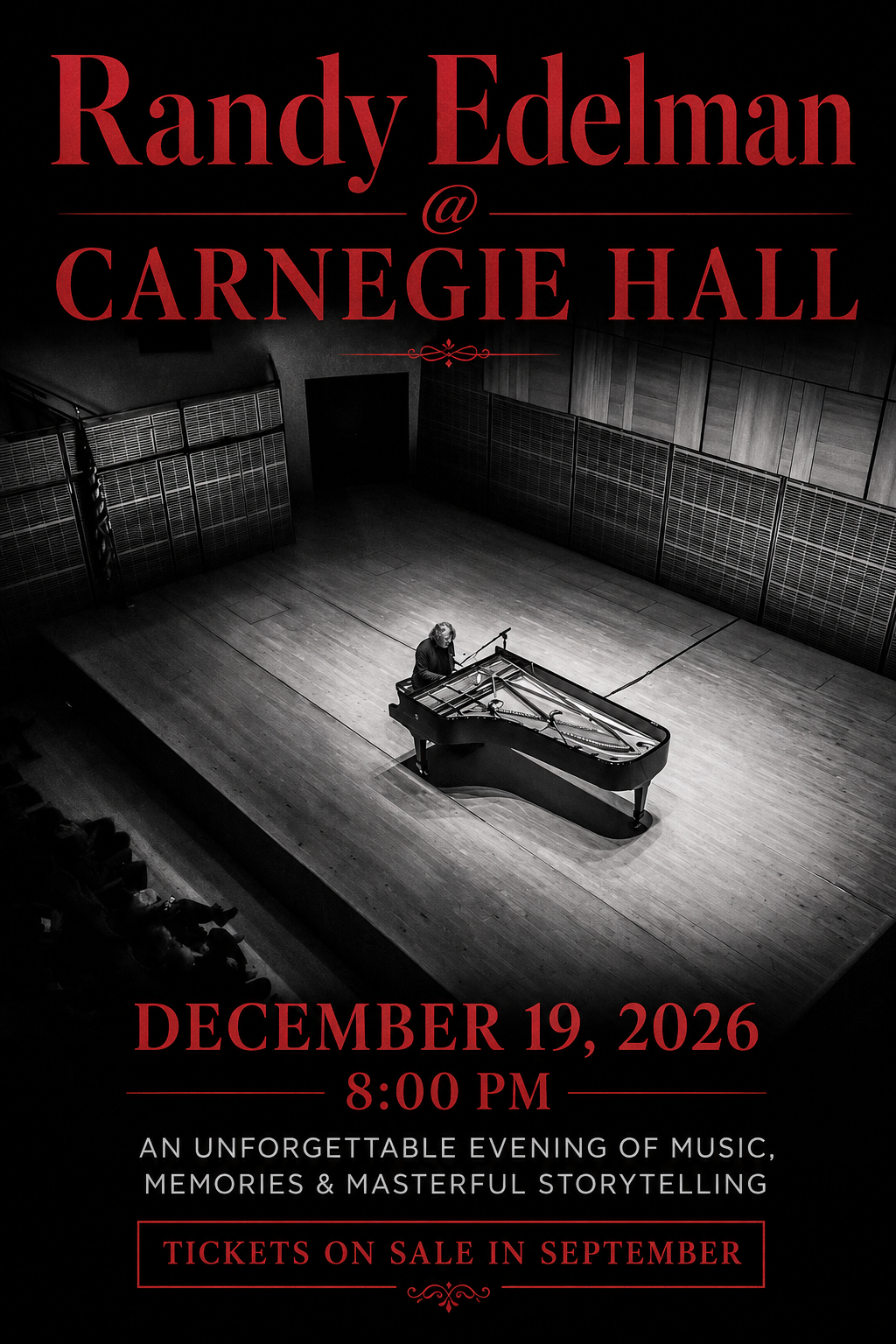
For his third appearance at the world’s most storied stage, the celebrated composer proves that possibility, not nostalgia, is the engine of a legendary career..
Some artists spend a lifetime perfecting one thing. Randy Edelman has spent his refusing to. What he possesses instead — and what has carried him from the songwriter’s bench to the Hollywood scoring stage to the great concert halls of the world — is something far rarer: a curious heart, full of possibilities. It is the quality that makes him nearly impossible to categorize and utterly impossible to forget. On December 19, that heart comes home, as Edelman returns to Carnegie Hall for the third time in his extraordinary career.
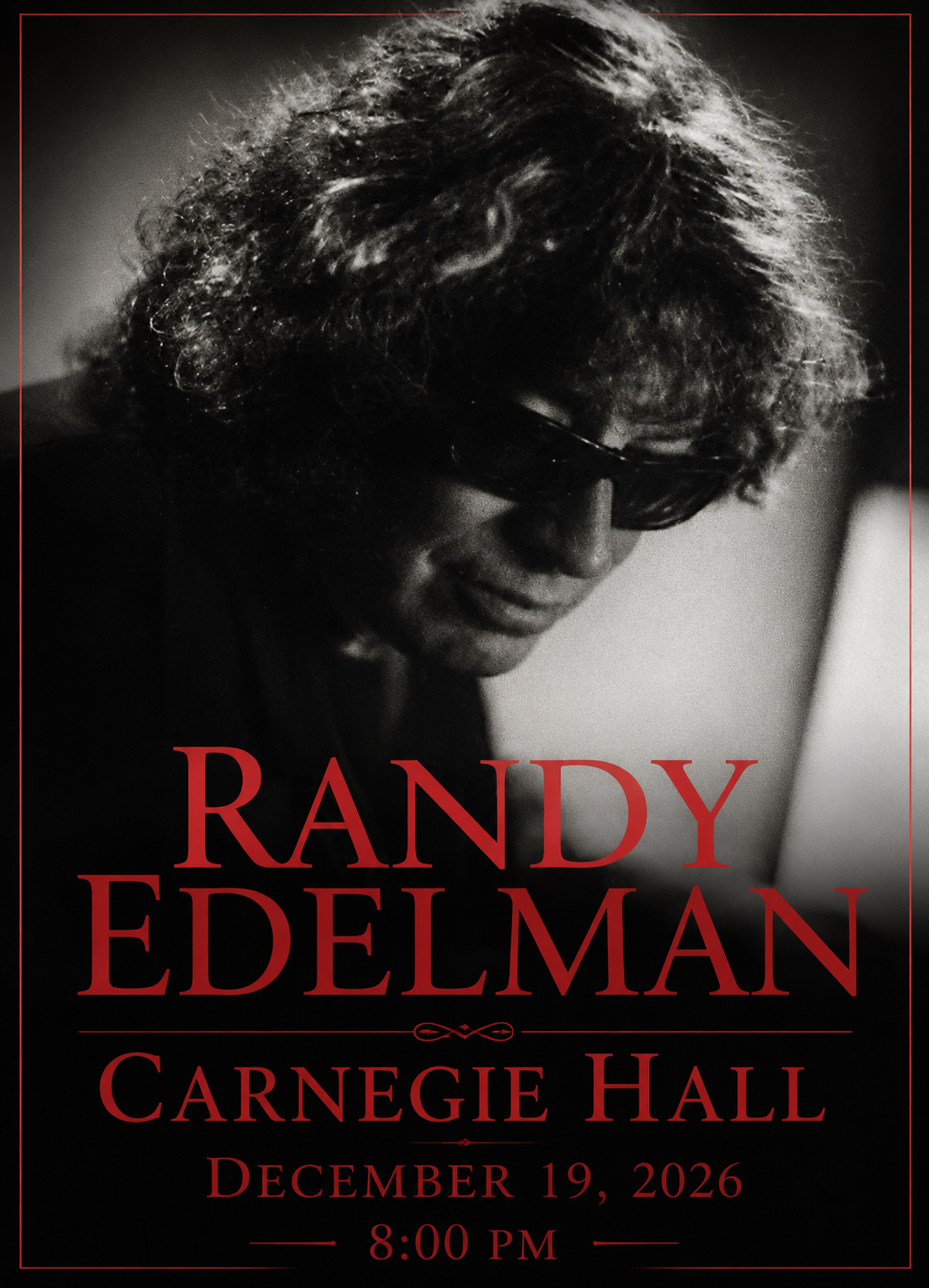
A third invitation to Carnegie Hall is not a courtesy. It is a verdict. The venue that has hosted Tchaikovsky, Gershwin, and Bernstein does not traffic in sentiment; it extends its stage to artists whose work has entered the permanent conversation. Edelman’s has. His scores — the sweeping romanticism of The Last of the Mohicans, the solemn grandeur of Gettysburg, the mischievous wit of The Mask, Kindergarten Cop, and My Cousin Vinny — long ago slipped past the boundaries of cinema and into the world’s shared emotional vocabulary. His themes have accompanied Olympic broadcasts, trailers, and triumphs. They are played when something matters.
Yet the man who wrote them has never once stood still long enough to be defined by them. That is the curiosity at work. Before Hollywood ever called, Edelman was a songwriter whose melodies found their way into the repertoires of some of popular music’s greatest voices — a young artist touring the world, filling rooms with nothing but a piano, a voice, and an unguarded sense of wonder. Decades later, that is precisely what he brings back to 57th Street: not an orchestra of associates, but himself — storyteller, pianist, singer, and living archive of one of the most varied careers in American music.
And this is where Edelman diverges from nearly every artist granted a legacy: he treats his own catalog not as a monument but as a doorway. At an age when most composers curate, Edelman creates. A new album is taking shape. A new stage musical is in development. His concert calendar reads like that of an artist on the ascent — because, remarkably, he is one. Each project is approached the way he has approached everything for half a century: with the open-hearted conviction that the best melody might still be the next one.
Audiences feel this. It is why his live performances have become something closer to communion than concert. Edelman does not perform at his audience; he confides in them. Between songs come the stories — of film sets and recording studios, of legends encountered and chances taken — delivered with the timing of a raconteur and the warmth of a man who still cannot quite believe his good fortune, even though he earned every bit of it. When the stories end and the hands return to the keys, something happens in the room that no streaming platform will ever replicate.
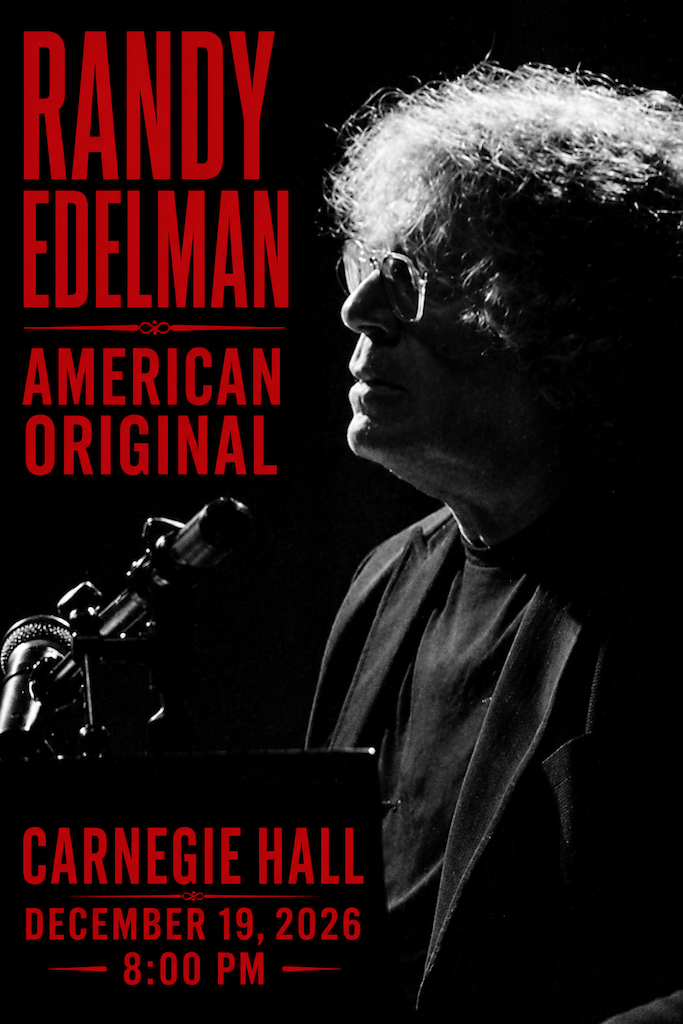
That is what awaits at Carnegie Hall on December 19: not a retrospective, but a revelation — an evening inside the imagination of an artist who has scored America’s movies, soundtracked its memories, and never lost the wide-eyed conviction that music is a place where anything can still happen. The hall has hosted many masters. Few of them arrive still asking, with genuine delight, what comes next.
Randy Edelman has a curious heart full of possibilities — and on December 19, Carnegie Hall belongs to every one of them.